Behind every beautifully finished interior is a workroom translating an inspired vision into reality. Passed through skilled hands, lighting, furniture, and drapery call for countless unseen decisions that ultimately define the most breathtaking details. We invited three trusted workroom specialists to share how collaboration, craft, and expertise elevate a good application into a great one.
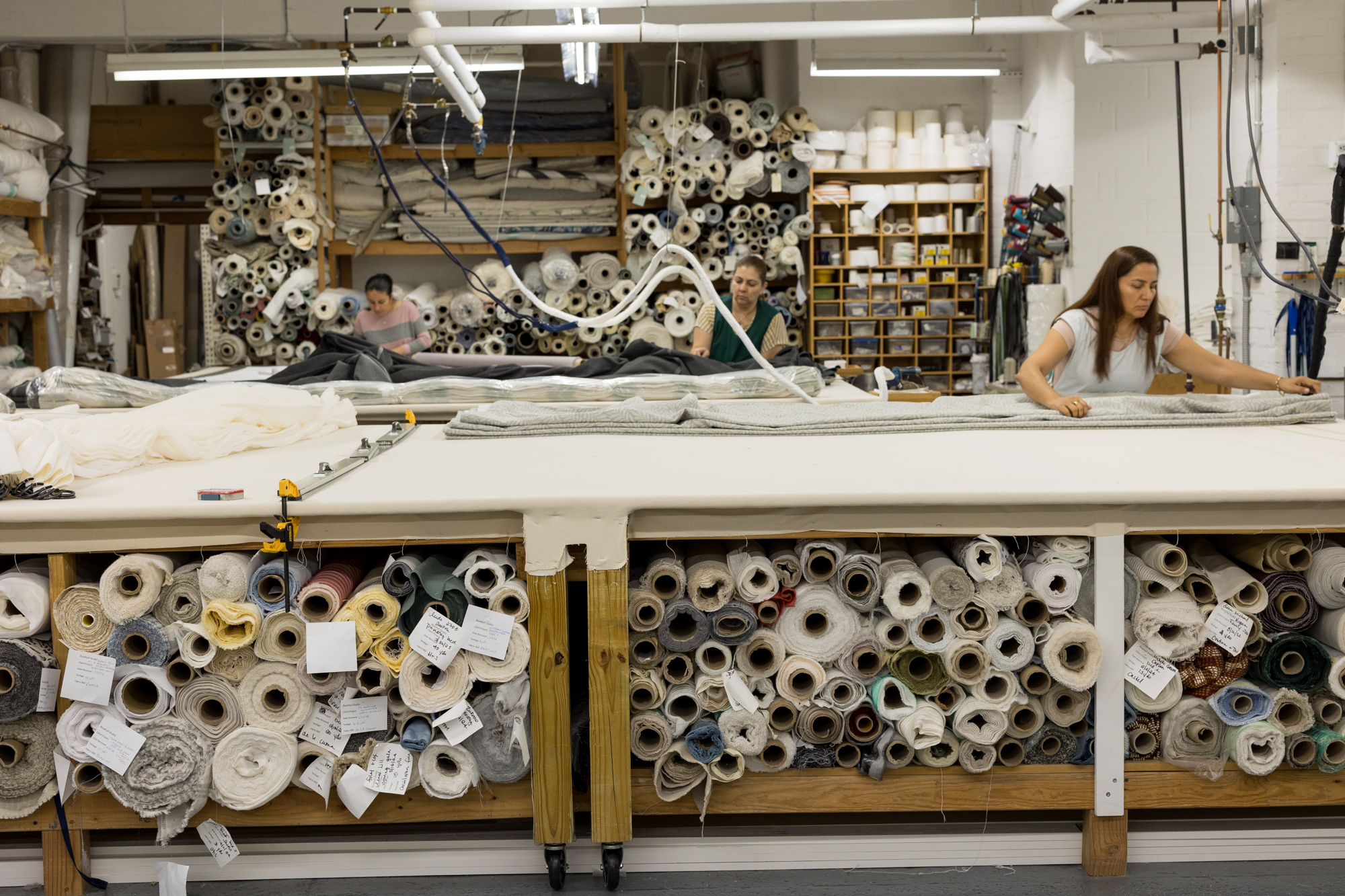
Otto Munder, a talented finisher and lampshade maker, began his craft in 1963. Later joined by his sons, Otto and Mauricio, Munder & Sons has acquired decades of masterful handcraftsmanship, creating lampshades that have appeared in the projects of major interior designers across the United States and beyond.
 (7).png)
SAMUEL & SONS: What considerations help ensure a trim looks beautiful not just on install day, but years later?
MUNDER & SONS: Trims that are made with natural fibers. Quality trims over time will naturally age and get an aged-softened patina. These trims get better with time. Also, a well-made trim can usually be salvaged and reused, while cheap trims will break apart.
S&S: Is there a type of trim you’re particularly excited to work with right now, and why?
M&S: I really love Mark D. Sikes’ new collection with Samuel & Sons. It’s fresh and fun with a beautiful color palette. Trimmings are like candy to me, I’m always excited when receiving a package of trimming. But to your question, you can never go wrong with a beautiful gimp or fringe.
S&S: What’s one piece of advice you’d give designers looking to elevate their project with trim?
M&S: Study the great designers like Miles Redd and Martin Brudnizki to learn how they use trimming. For instance, Mr. Redd trimmed a kraft paper shade with some tassel trim, this is beautiful! I would have never done that before seeing it.

From Paris to London, Rabat to New York, Jouffre perpetuates the fine tradition of the upholsterer’s profession, blending expertise with French luxury. Since 1987, Jouffre has been devoted to creativity guided by exacting standards and attention to detail. It is this excellence that has manifested in both prestigious awards and a place in some of the world’s finest interiors.
 (8).png)
SAMUEL & SONS: Is there a type of trim you’re particularly excited to work with right now, and why?
JOUFFRE: We are very excited by the trend that recontextualizes traditional elements like rosettes, tassels, and gimps within more modern silhouettes and color palettes, viewing them through a post-modern lens.
S&S: What’s one piece of advice you’d give designers looking to elevate their project with trim?
J: The best advice is to consider trim intentionally from the very beginning. Focus on its potential to transform the design, rather than treating it as an afterthought meant only for local contrast or accenting.
S&S: What’s a finishing detail that clients always notice?
J: We are fortunate to work with highly discerning and detail-oriented clients, who often focus on seams and how materials meet. As we join fabric with metal, wood, and trimming, the connection must be flawless, perfectly reconciling materials that often have varying and conflicting properties.

 (9).png) Robin Feuer is a third-generation designer who began sewing at just 14, learning traditional techniques from her grandmother and mother. With an award-winning background in fashion, Robin entered the world of interiors to create RoseHyll Studio. She was joined by Ariel Tensen, whose experience spans high fashion and modern home design, informed by more than a decade in the publishing industry at Condé Nast and Hearst Magazines. Together, they bring a wealth of skill and discernment to their work.
Robin Feuer is a third-generation designer who began sewing at just 14, learning traditional techniques from her grandmother and mother. With an award-winning background in fashion, Robin entered the world of interiors to create RoseHyll Studio. She was joined by Ariel Tensen, whose experience spans high fashion and modern home design, informed by more than a decade in the publishing industry at Condé Nast and Hearst Magazines. Together, they bring a wealth of skill and discernment to their work.
SAMUEL & SONS: What separates a good trim application from a truly great one?
ROSEHYLL STUDIO: Layered applications. Using trim in unexpected or nontraditional ways elevates the design. Thoughtful layering creates depth and visual interest.
S&S: What is the most challenging trim application?
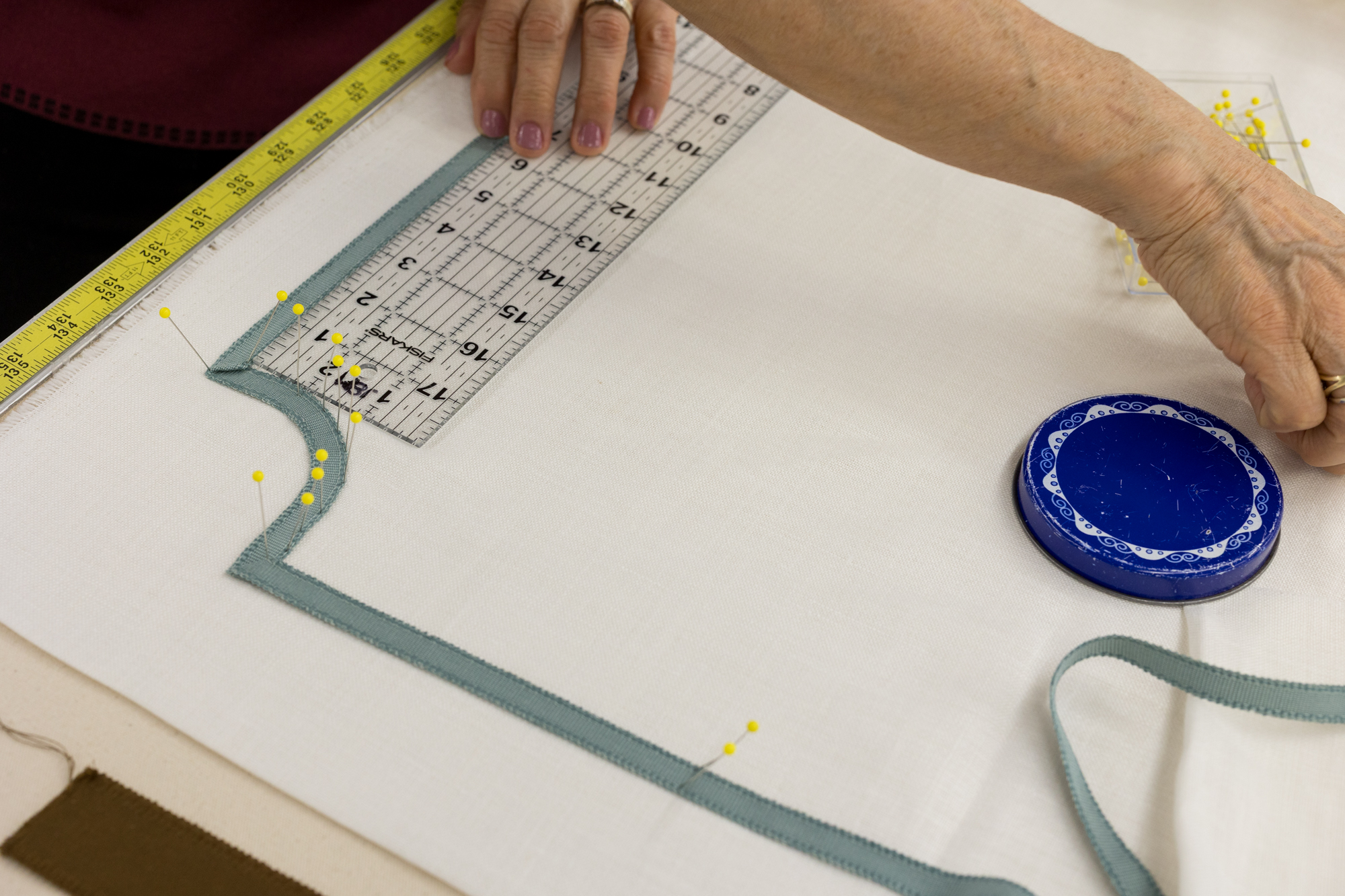
RHS: Shaping a straight tape, such as Cambridge, into curves or custom forms. Transforming something linear into organic shapes requires precision and technical finesse.
S&S: Is there a trim you are particularly excited about?
RHS: Materials with unique properties, such as velvet trims with sculptural texture or glass bead trims that catch the light beautifully. These details bring richness and dimension to a project.

THE COMMON THREAD
What makes for the best collaboration between a designer and a workroom?
JOUFFRE: We are deeply passionate about our work, and we value collaborators who share that enthusiasm. We also know that project schedules are demanding, but we consistently find that the best results come from a thorough, calm process with realistic timelines.
MUNDER & SONS: Designers are creative people by nature, but getting others to see their vision can sometimes be difficult. So, the more information a designer gives me, like photos, tear sheets, and references, the easier it is for me to understand their vision.
ROSEHYLL STUDIO: The best collaborations are built on clear communication and true partnership. Being available to talk through details and problem solve together makes all the difference. Mutual respect for each other's expertise strengthens the outcome.
At the start of a project, what information or direction sets you up for success?
JOUFFRE: The most helpful initial briefs clearly define the project's scope, keep the end client's needs and lifestyle in mind, convey a strong vision with context, and include a preliminary material palette.
MUNDER & SONS: I like spreadsheets with key details like sidemarks, photos, links, etc. This allows me to research each light and maybe prevent issues that might arise.
ROSEHYLL STUDIO: A designer with a clear vision allows us to execute with confidence. It is also helpful when the designer is open to technical suggestions.
What qualities do you look for in a trim before using it in a project? (10).png)
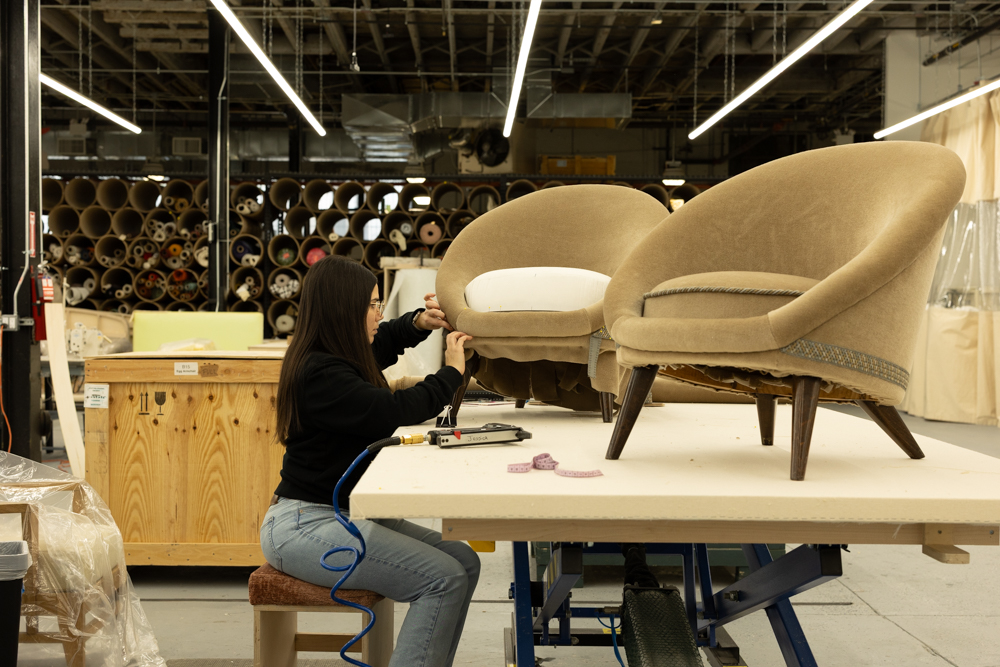
JOUFFRE: When selecting trims, we first consider practicality, ensuring the intended use matches the trim's capabilities. For instance, on drapes, the trim should enhance the border without affecting how the fabric hangs. For upholstery, which involves high stress, we assess if the trim can be manipulated and stretched for a beautiful, longlasting finish. Aesthetically, trim can add character or a tonal shift to a simple design, but we always ensure material harmony with the selected fabrics.
MUNDER & SONS: Let me just say that Samuel & Sons is simply the best for trims, I’m never disappointed. Trims that are made with natural materials and the highest craftsmanship. I know that sounds simple, but it’s true. There isn’t a short-cut for quality.
ROSEHYLL STUDIO: We evaluate how the trim interacts with the fabric. How will it lay? How will it behave once applied? What is the intended application? It must complement both the aesthetic and the structure of the window treatment.
Is there a detail or technique that deserves a resurgence?
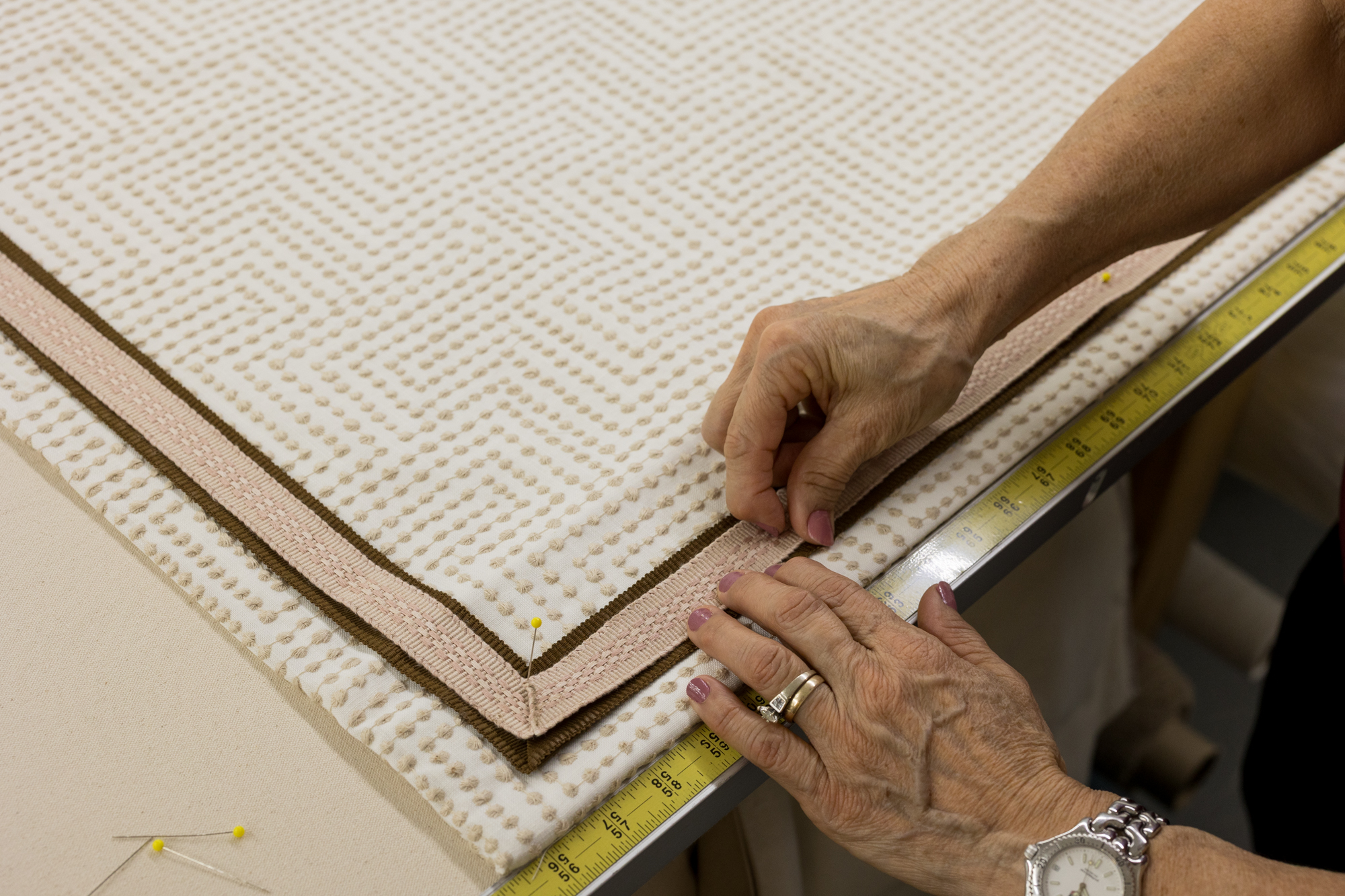
JOUFFRE: We would love to see the flat tape trims of the past replace the overused double piping trim that is now common in contemporary upholstery of traditional designs. We believe flat tapes are far more elegant and clean, though they require greater attention to detail. We feel that extra effort always yields the best outcome.
MUNDER & SONS: I would like to see the use of wider borders on shades. They can be used on drum lampshades, or you can add a “cuff” onto the bottom.
ROSEHYLL STUDIO: Bullion trim used in a more modern, restrained application. Traditional elements can feel fresh again when paired with cleaner lines.
Subscribe to our newsletter to be the first to join us as we unlock the door to our latest collaboration on January 17th.




.png)
.png)

.png)