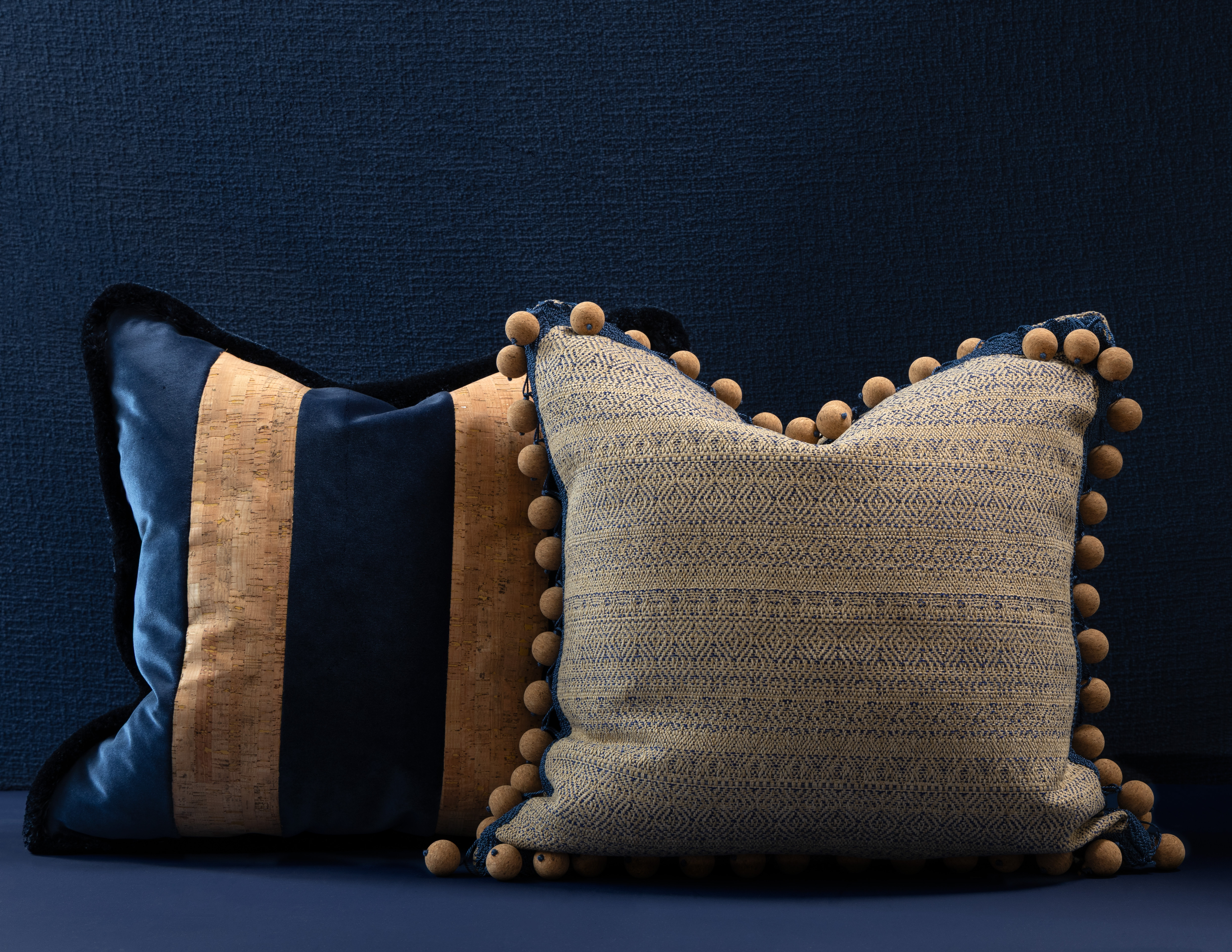
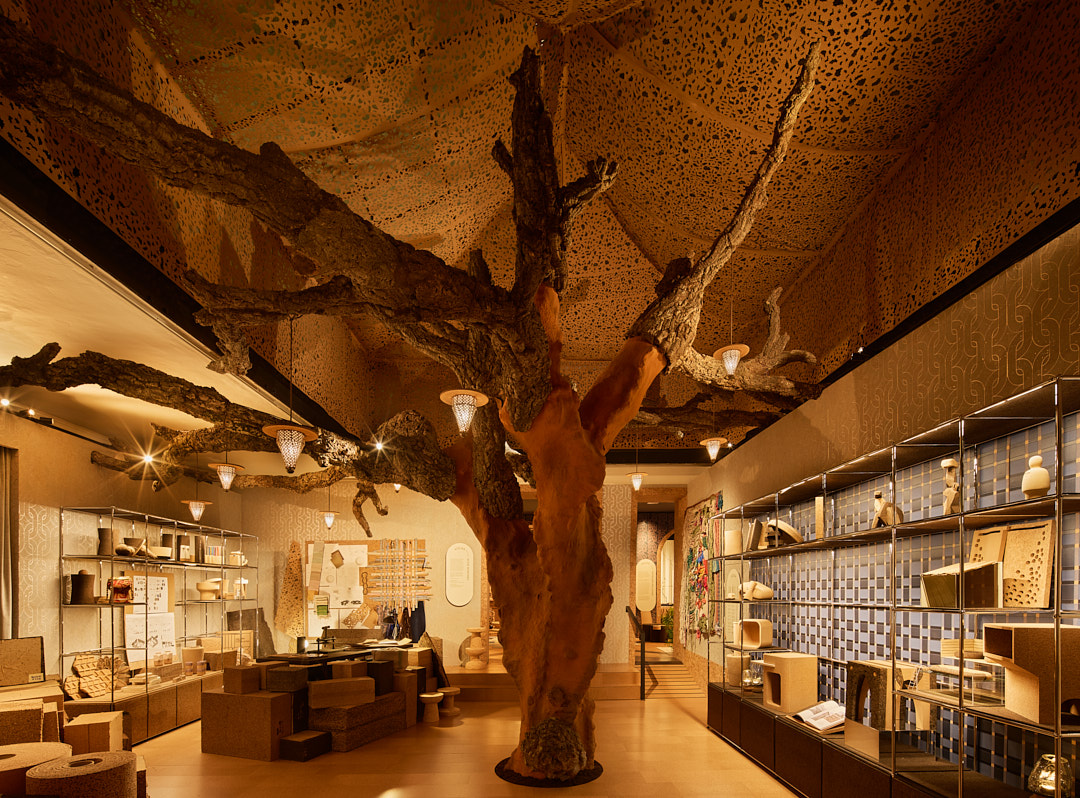
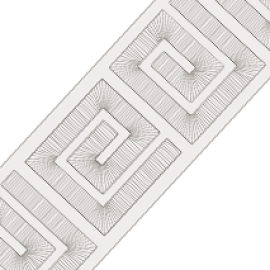
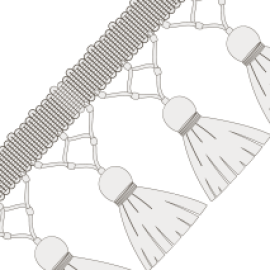
Casa Cork by David Rockwell, in partnership with the Cork Collective and Corticeira Amorim, presented a bold vision for the future of sustainable interior design, inspired by the Cork Collective’s mission to transform used natural cork stoppers into a valuable, renewable resource. We were honored to contribute inventive trimmings to this forward-thinking showcase at Milan Design Week, working with our Custom Studio to craft an impressive range of cork passementerie pieces, from a sculptural tieback to tantalizing beaded fringe.
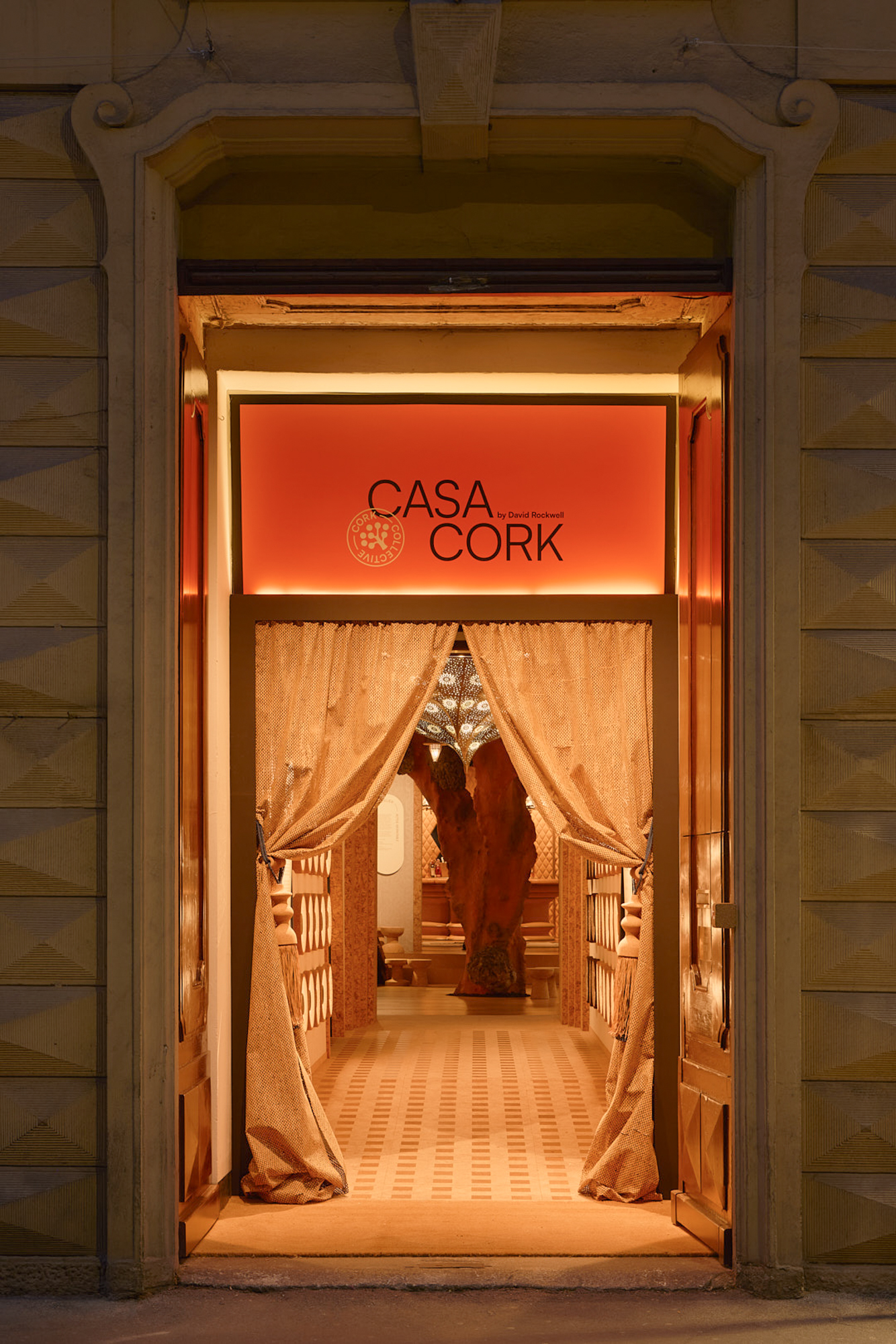
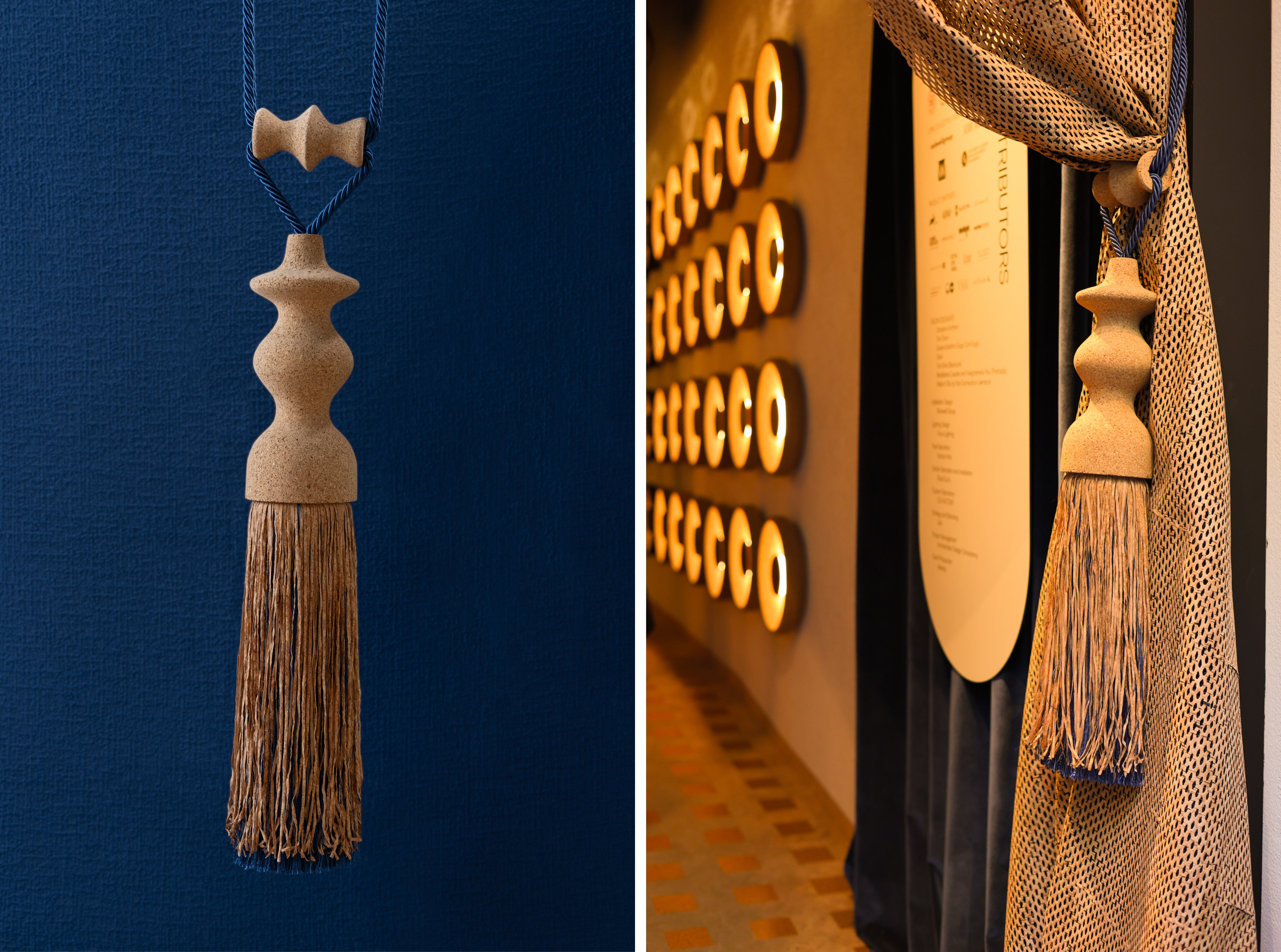
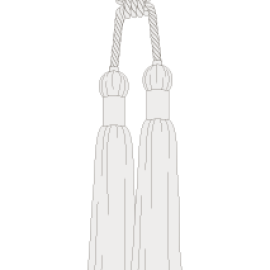
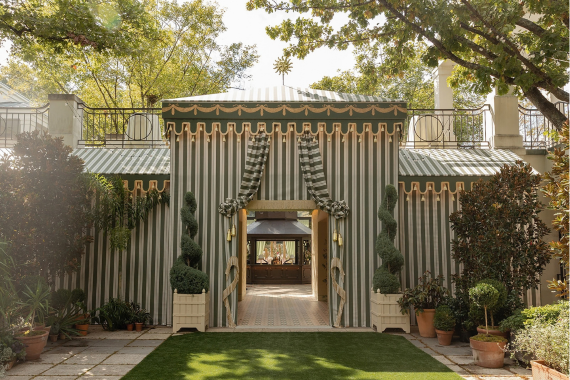
Visitors entered Casa Cork through a creative curtain, swept aside by two Custom tassel tiebacks, artfully composed of cork molds and fringe that set the tone for the imaginative space beyond.
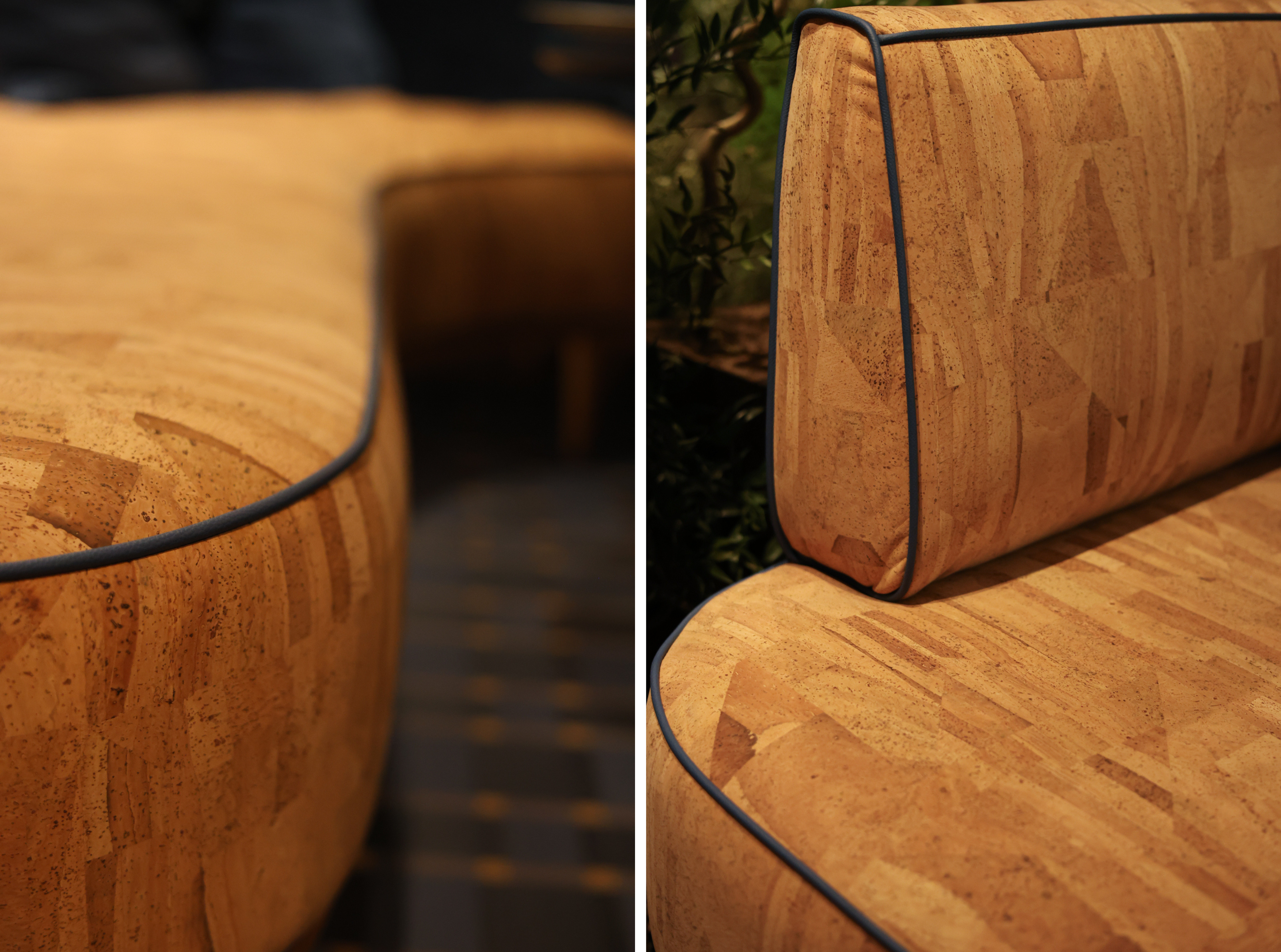
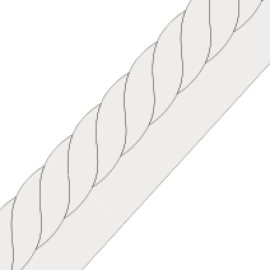
Inside, Leather Piping in Cobalt traced the edges of a cork-upholstered sofa, echoing its natural hand and enhancing the installation’s organic elegance.
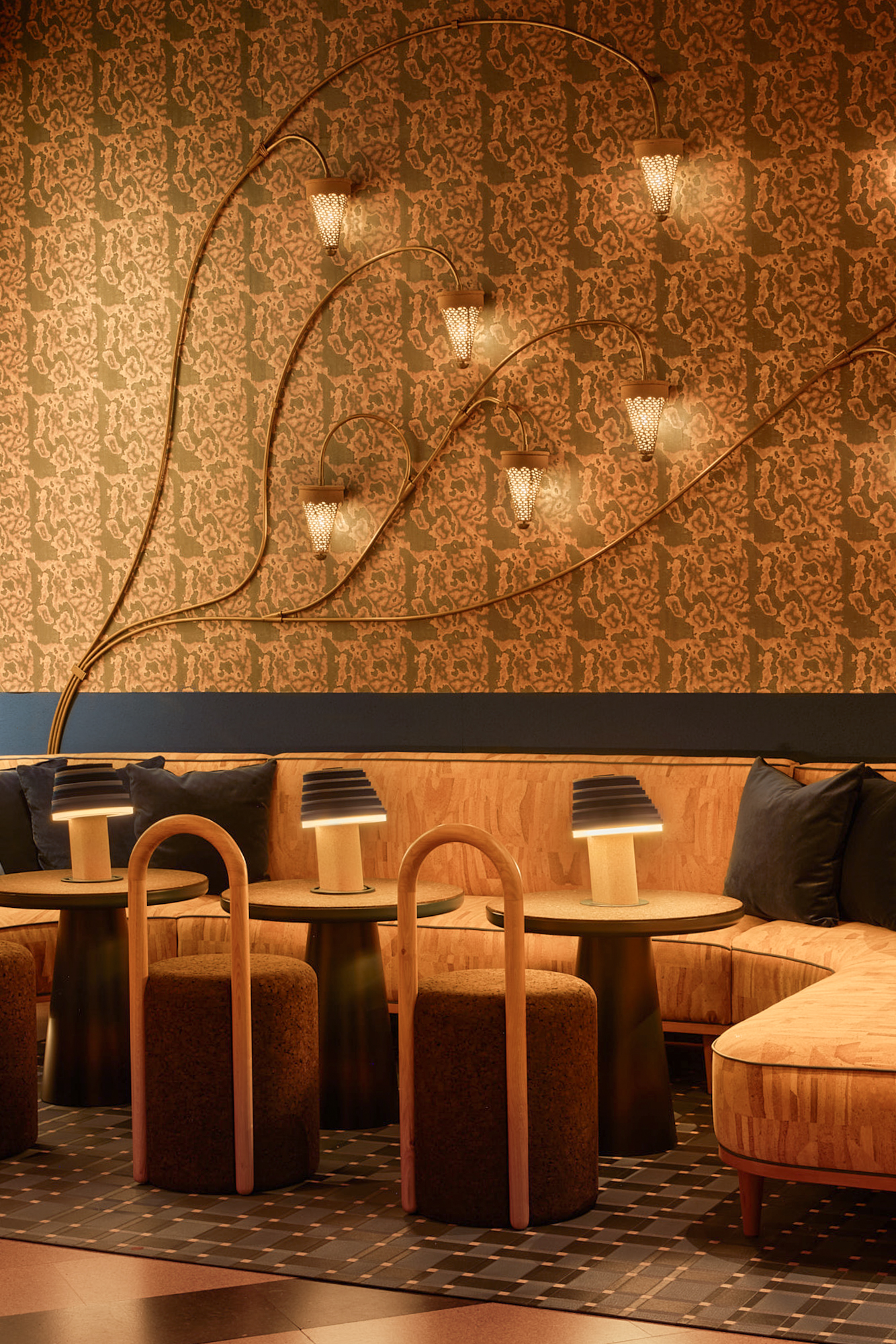

Working in close collaboration, our Creative and Custom teams explored the material’s full potential, developing everything from borders to beaded fringe in cork, reimagining classic techniques through a contemporary, sustainable lens.

“Cork has fascinated us for years because of its incredible malleability, organic beauty, and applicability in the built environment—not to mention its sustainable properties. Casa Cork was born out of a desire to help educate designers and consumers about cork’s incredible transformative properties and potential because it can be recycled over and over again—from wine stoppers to community space flooring or decorative tassels. I think we achieved a kind of cork wonderland that expanded people’s perceptions and pushed the material to its limits and beyond.”
- David Rockwell, founder and president of Rockwell Group
.png)
WHY CORK?
.jpg)
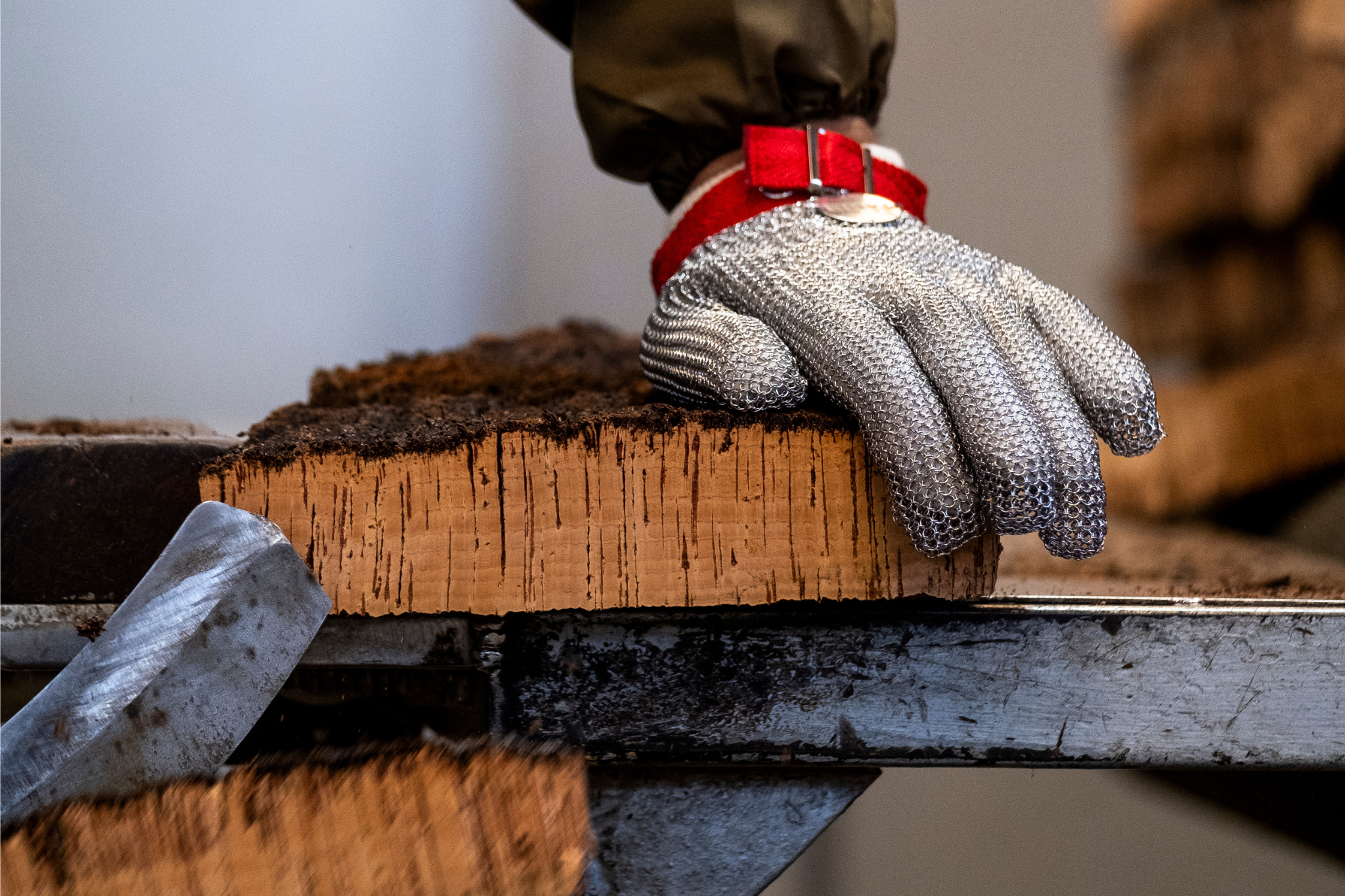
Cork is harvested without harming the tree. The bark of the cork oak tree is stripped by hand every nine years without felling or damaging the tree. The bark regenerates, making it one of the most renewable materials on Earth. |
.jpg)
Cork oak forests absorb 14 million tons of CO2 annually. Even more impressively, a harvested cork tree stores up to five times more carbon as it regenerates its bark, making the use of cork not just sustainable, but actively beneficial for the climate. |
.jpg)
More than 50% of cork’s volume is air, making it naturally sound-absorbing, fire-retardant, and antimicrobial. It’s a quiet material, in every sense of the word. |
Nearly 3 billion cork stoppers are discarded annually in the U.S., and less than 1% are recycled. Imagine a future where every cork gets a second life, from the bottle to a beautiful end product. |
DID YOU MISS US IN MILAN?
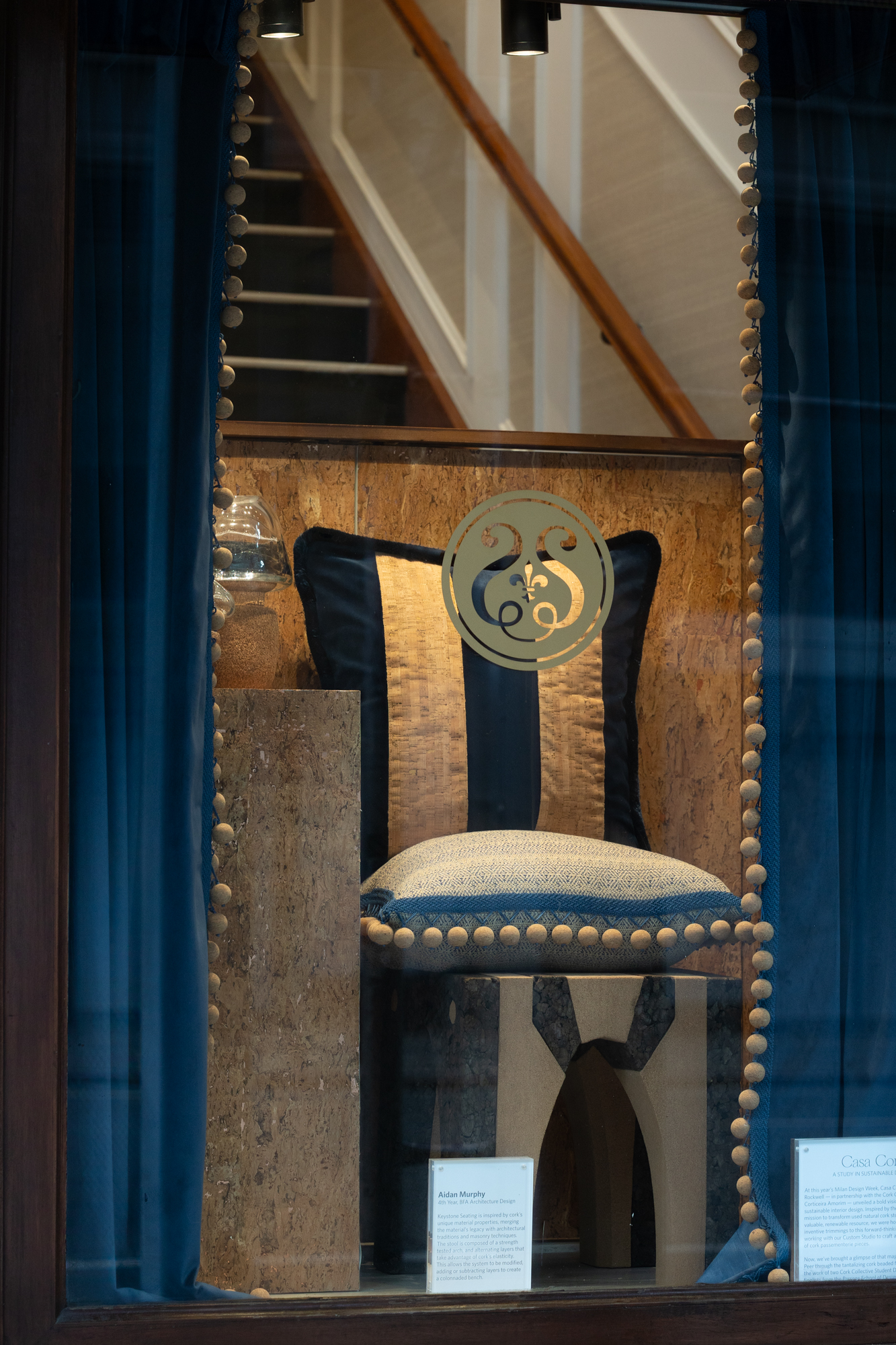
Stop by our New York flagship showroom and view a vignette of our cork creations firsthand, featuring work from two Cork Collective Student Design Competition Finalists from Parsons School of Design.

Subscribe to our newsletter to be the first to join us as we unlock the door to our latest collaboration on January 17th.



.png)
.png)
.png)