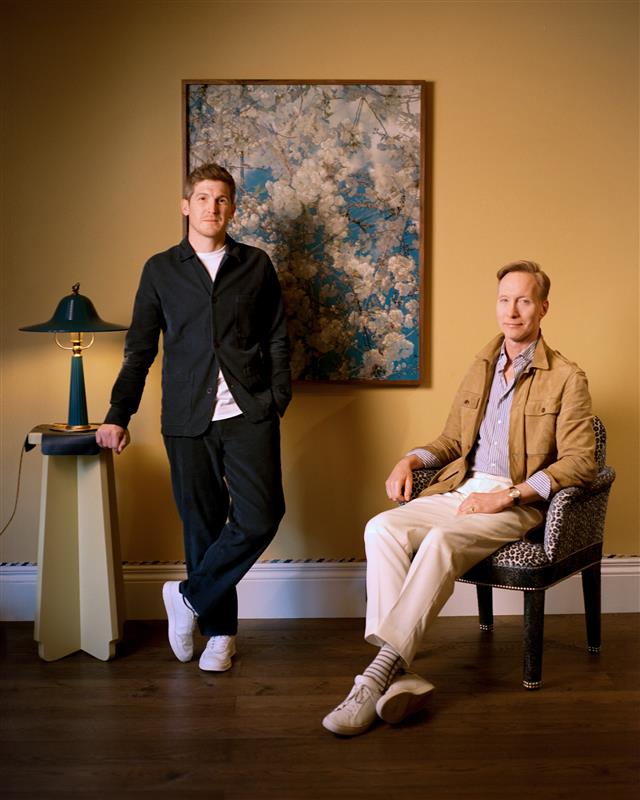
We sat down with And Objects co-founders Martin Brudnizki and Nicholas Jeanes to explore our new collaboration, Romaunt. In conversation, they reflect on the artistic influences, design philosophy, and considered craftsmanship that shaped each inspired piece.
Samuel & Sons: Capture the Romaunt Collection in three words.
Martin Brudnizki: Romantic, lyrical, intricate.
S&S: How did you come to the name Romaunt?
MB: The word Romaunt means ‘romantic tale’ in French, a name that felt fitting for a collection inspired by the Pre-Raphaelites, who were themselves storytellers through colour and detail. The movement often looked to historic themes, not to replicate them, but to reinterpret them with intensity and feeling. In much the same way, Romaunt allowed us to signal that sense of narrative and craftsmanship. It nods to history yet feels open to reinvention, which is very much the spirit of the collection.
S&S: What drew you to the Pre-Raphaelite movement as inspiration, and how does it translate into the collection?
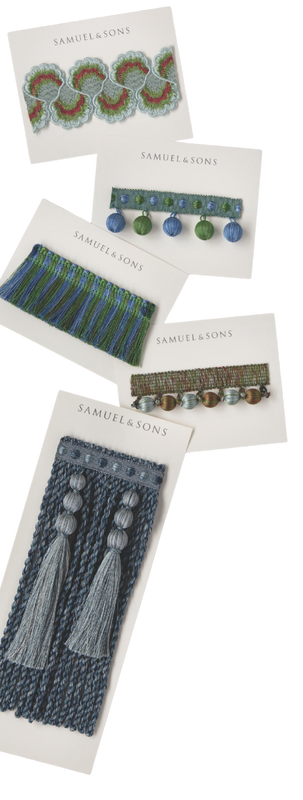
MB: The Pre-Raphaelites were committed to beauty, colour, nature, emotion, and meticulous detail. Their work has a kind of interior life, where you sense depth beneath the ornament. We were drawn to that philosophy more than any singular aesthetic. Romaunt translates those ideas into passementerie through layered textures, sculptural forms, and a palette inspired by the opulent tones of the movement.
In the early stages, we explored these ideas through the lens of a salon; a setting where art, textiles, and conversation would naturally converge. The concept evolved, but the essence remained: a sense of intimacy, creative exchange, and quiet romanticism. Romaunt aims to bring that feeling into the finer details of a room.
S&S: How do you see passementerie as a medium for telling
.png) stories in interiors?
stories in interiors?
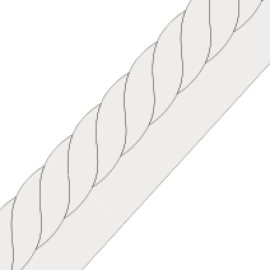
MB: Passementerie is sometimes thought of as subtle, but it is never silent. A braid or cord can shift the entire character of a piece; it frames, connects, softens, or sharpens. In many ways, it carries a narrative of its own. The separation of materiality is defined by passementerie; there is a beginning, a middle, and an end, and that journey has always felt like a form of storytelling to me. It is rooted in handwork, symbolism, and the small, deliberate gestures that give a space its emotional life. These details may be modest in scale, but they help a room reveal itself with a kind of quiet confidence.
S&S: How does the collection bridge its historic roots with today's interiors?
MB: There has been a growing revival of trimmed upholstery — bullion, fringe, decorative braiding — but the key is to interpret these traditions for modern life. We focused on essence rather than imitation. The collection draws from the movement’s fascination with nature, richness, and emotion, but is translated through contemporary proportions and a palette that works effortlessly today. It isn’t about recreating the past; it’s about letting the past inform a more expressive present.
S&S: Your interiors are known for their expert, expressive use of passementerie. What did you feel was missing in the world of trimmings, and how does Romaunt fill that space?
MB: I felt there was room for more charm; pieces that are decorative without being fussy, and characterful without shouting. The Romaunt collection introduces sculptural silhouettes, tactility, and palettes that feel sophisticated yet a touch eccentric. They are trimmings that support a room, bringing definition and personality without overwhelming it.
.png) S&S: Do you have a favorite piece from the collection?
S&S: Do you have a favorite piece from the collection?
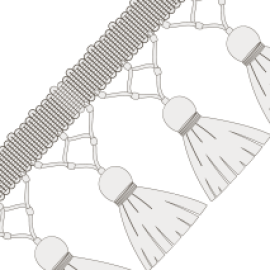
MB: They each bring something different to a room, so choosing a favourite feels rather impossible, they all have their own intentions and applications. That said, I do have a soft spot for the Tasseled Bullion Fringe. We have applied the Tasseled Bullion Fringe in Rossetti Crimson to a sofa in our London flat, and it completely transforms the piece. Without trims, sofas can feel a little unresolved; this one lends definition and a touch of theatre. It’s a showstopping detail, yet beautifully balanced.
S&S: The level of hand-finishing is extraordinary. What does this human touch bring to the collection?
MB: It brings life. You notice the subtle variations, the tension in the cord, the rhythm of the stitching. That controlled, considered human touch is the difference between something made and something crafted.
S&S: How do you envision designers using Romaunt in their projects?
MB: With confidence, and perhaps a sense of play. The collection ranges from bold borders to quieter cords, giving designers the freedom to create moments of intimacy or drama. My hope is that it helps shape spaces that linger in the memory; providing the small, expressive details that make a room feel truly lived in.
S&S: What excites you most about bringing Romaunt into the world?
MB: Seeing how others interpret it. Once a collection leaves the studio, it begins a new chapter. I am excited to watch Romaunt weave its way into different interiors, different stories, and different lives.
S&S: How does your studio's design philosophy align with the themes and aesthetic of the collection?
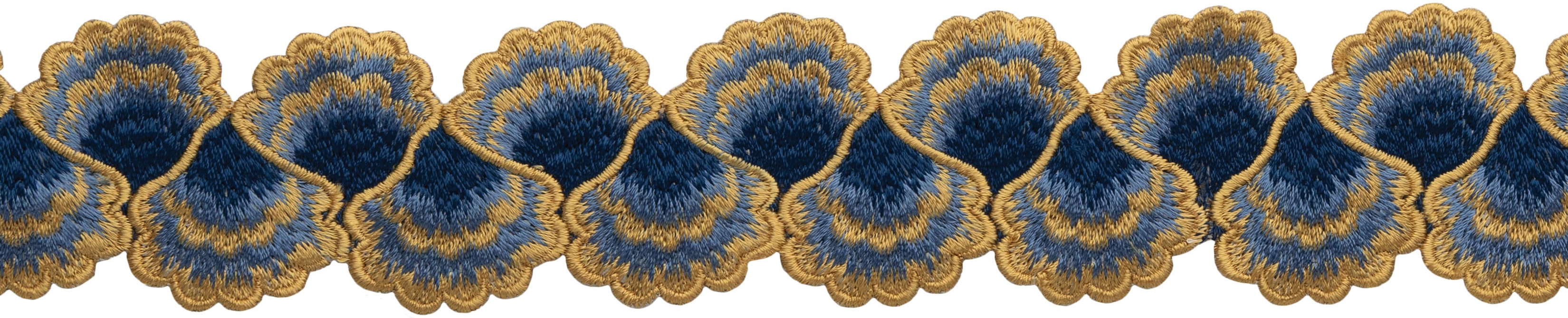
Nicholas Jeanes: At And Objects, we are drawn to pieces with character; objects that feel considered, crafted, and quietly expressive. The themes of Romaunt, particularly its connection to nature and ornament, align with that approach. We treated these trimmings much like we would a piece of furniture: thinking about form, proportion, tactility, and ultimately how they contribute to the atmosphere of a room.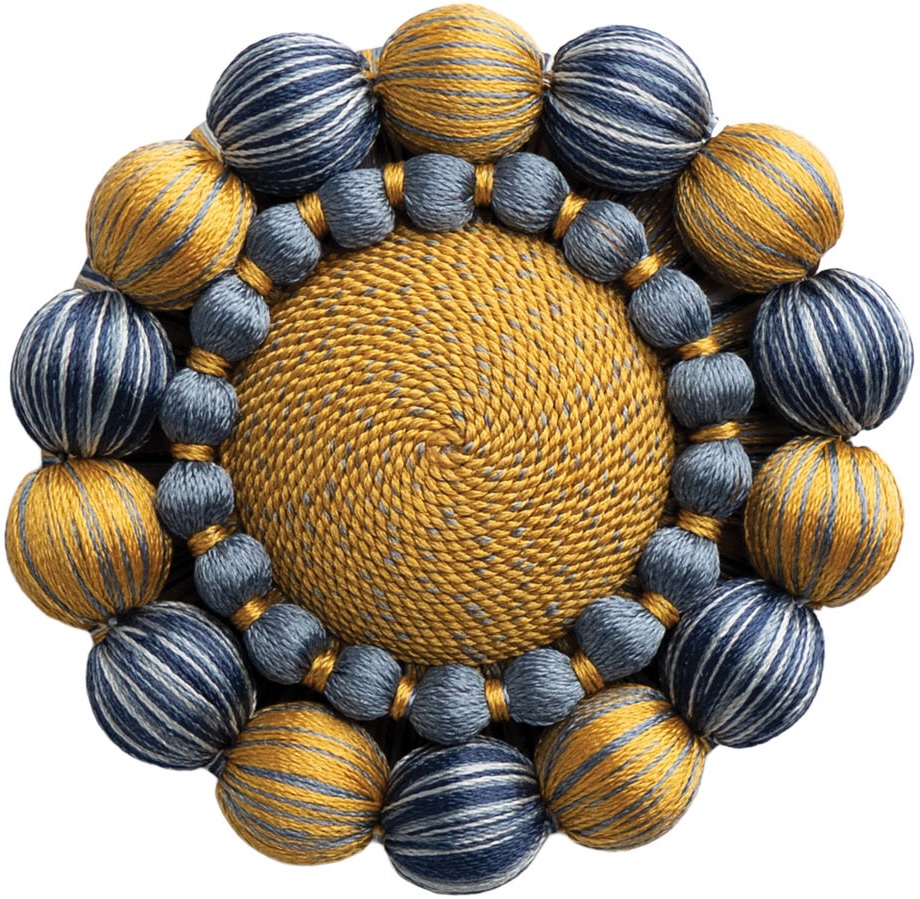
S&S: What were some of the design challenges you encountered in developing trimmings rather than furniture or larger objects?
NJ: Scale, because when you are working with something only a few centimeters wide, every fibre and twist becomes important. There is no room for anything extraneous. Another challenge was balancing ornament with versatility. The pieces needed to feel distinctive but still sit comfortably with a range of upholstery styles and interior moods.
S&S: Is there a detail or element within the collection that feels especially "And Objects" to you?
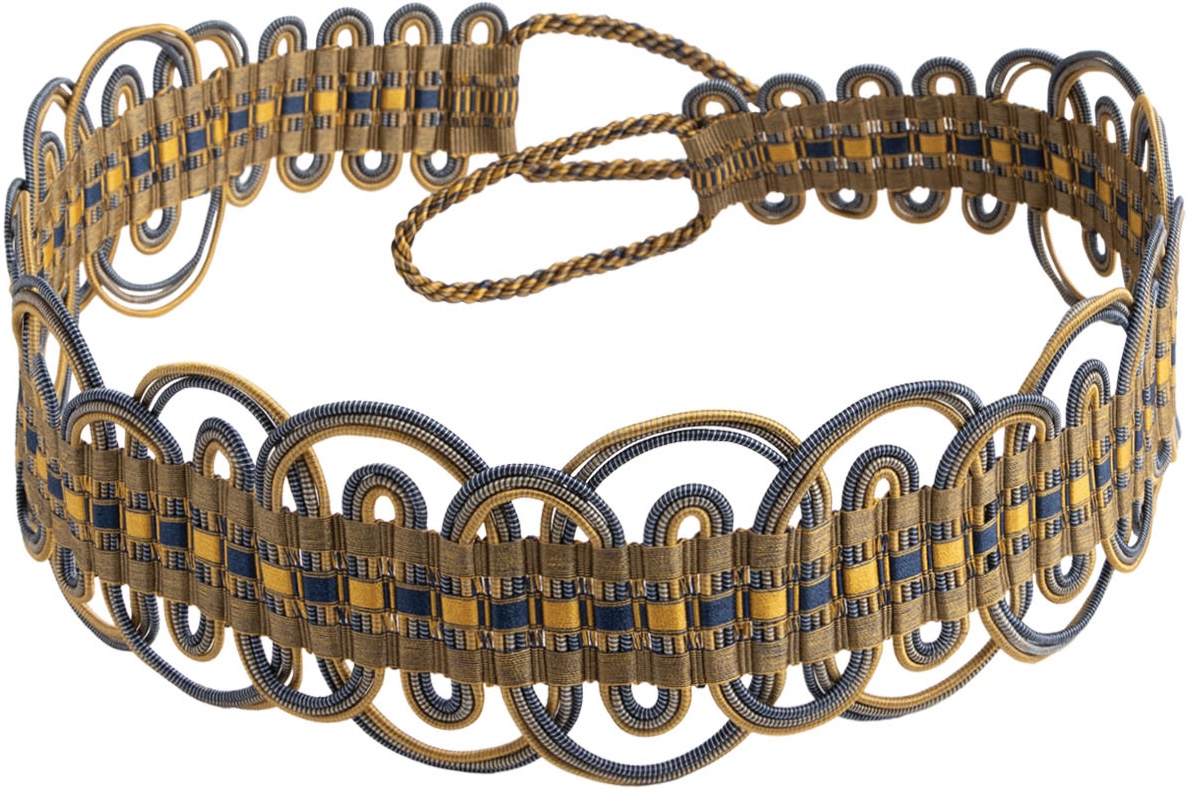
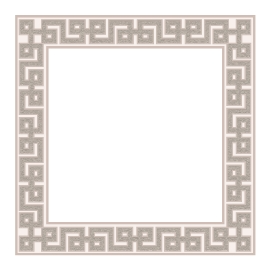
NJ: The interlaced braids [Crete Holdback]. They carry the same sense of rhythm and sculptural tactility we explore in our furniture. There’s a clarity to the form that feels very much like our design language, simply translated to a more intimate scale.
Subscribe to our newsletter to be the first to join us as we unlock the door to our latest collaboration on January 17th.


.png)
.png)
.png)
.png)